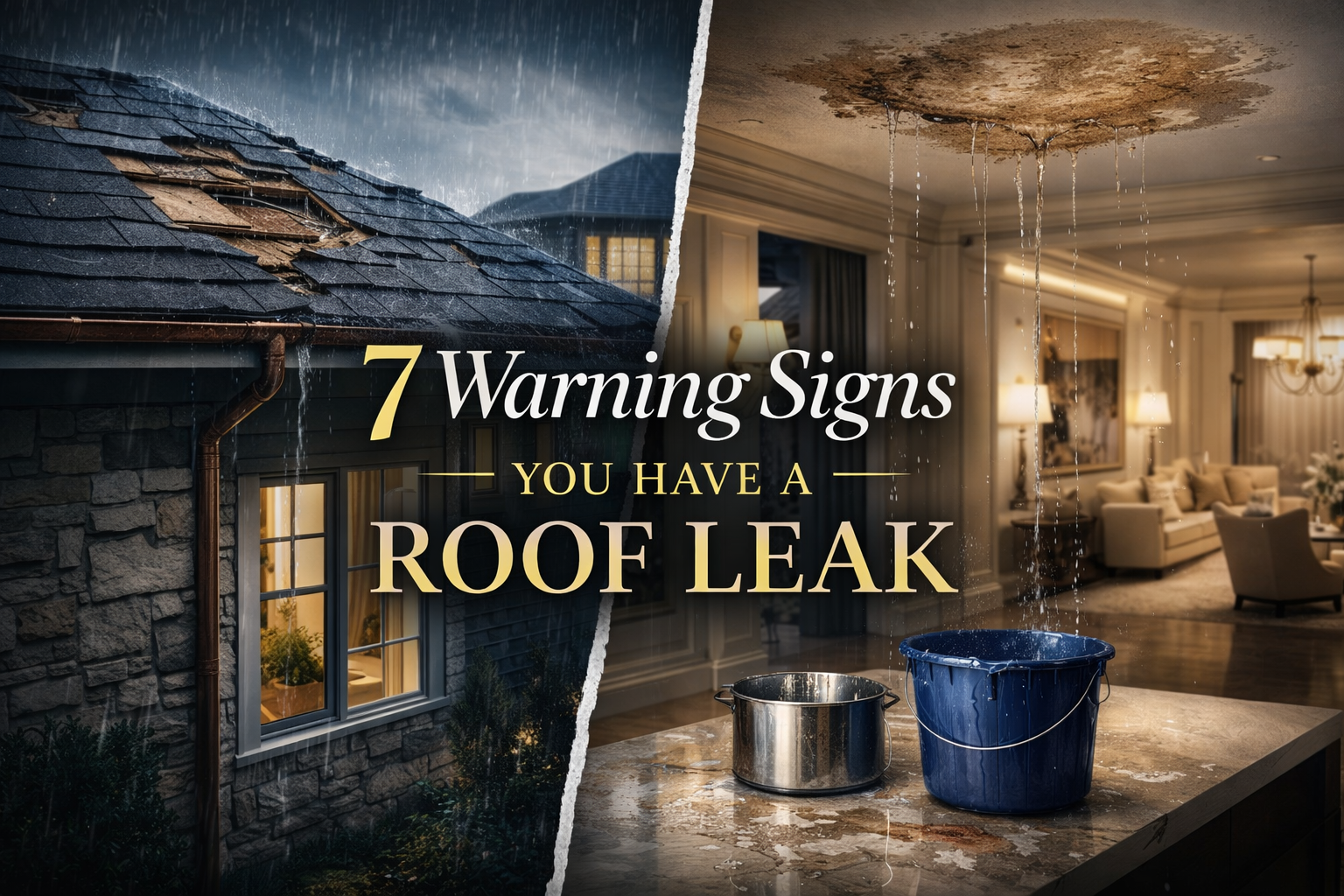
7 Warning Signs You Have a Roof Leak (Before Costly Damage Happens)
It All Begins Here
Roof leaks rarely start as emergencies, but they almost always grow into one if left unaddressed. Most homeowners don’t realize there’s a problem until visible damage appears inside the home.
Common early warning signs of a roof leak include:
Water stains on ceilings or interior walls
Bubbling or peeling paint and drywall
Musty or damp odors inside the home
Cracked, loose, or shifted roof tiles
Leaks that appear after wind, not just rain
Roofing debris or granules collecting around the property
Moisture damage appearing far from the roof edge
Why this matters:
Water often enters the roof in one location and travels before becoming visible. By the time you see interior damage, the source of the leak may already be affecting a larger area of the roofing system.
What causes most roof leaks?
Deteriorated underlayment
Failed flashing around vents and walls
Cracked sealant at roof penetrations
Tile movement from heat expansion
The takeaway:
Addressing a leak early can prevent structural damage, mold growth, and costly repairs down the line.

How Often Should You Get a Roof Inspection in Southern California?
It All Begins Here
In Southern California’s climate, roofing materials experience constant stress from heat, UV exposure, and seasonal winds. Regular roof inspections help homeowners stay ahead of problems before they turn into emergencies.
A roof inspection is recommended:
At least once per year
After heavy rain or wind events
Before buying or selling a home
When a roof is 10 years old or older
If the home hasn’t been inspected in several years
Why inspections are especially important in desert climates:
High temperatures accelerate material breakdown, dry out sealants, and expose underlayment faster than in milder regions.
What a professional roof inspection typically includes:
Tile, shingle, or membrane condition
Underlayment exposure or deterioration
Flashing, vents, and roof penetrations
Drainage systems and scuppers
Parapet walls and seams
Signs of moisture intrusion
The takeaway:
A routine inspection can extend the life of your roof and help you plan maintenance on your terms rather than reacting to unexpected damage.

Tile, Shingle, or Flat Roofing: What’s Best for Desert Homes?
It All Begins Here
Choosing the right roofing system goes beyond appearance. In desert regions, performance, durability, and maintenance requirements play a major role in long-term value.
Common roofing systems used in desert homes include:
Tile Roofing
Excellent heat resistance
Long lifespan when properly maintained
Strong visual appeal
Shingle Roofing
Lower upfront cost
Faster installation
Shorter lifespan in extreme heat
Flat Roofing Systems (Foam, Modified, PVC)
Ideal for modern or low-slope homes
Energy-efficient when maintained properly
Requires consistent drainage and upkeep
Why underlayment matters:
In high-heat environments, underlayment often fails before the roof covering itself. Proper installation and quality materials are critical to long-term performance.
How to choose the right system:
Consider the home’s design and roof slope
Factor in long-term maintenance expectations
Balance initial cost with lifespan and durability
The takeaway:
The best roofing system is the one designed for your home’s structure and local climate—not just the one that looks good.
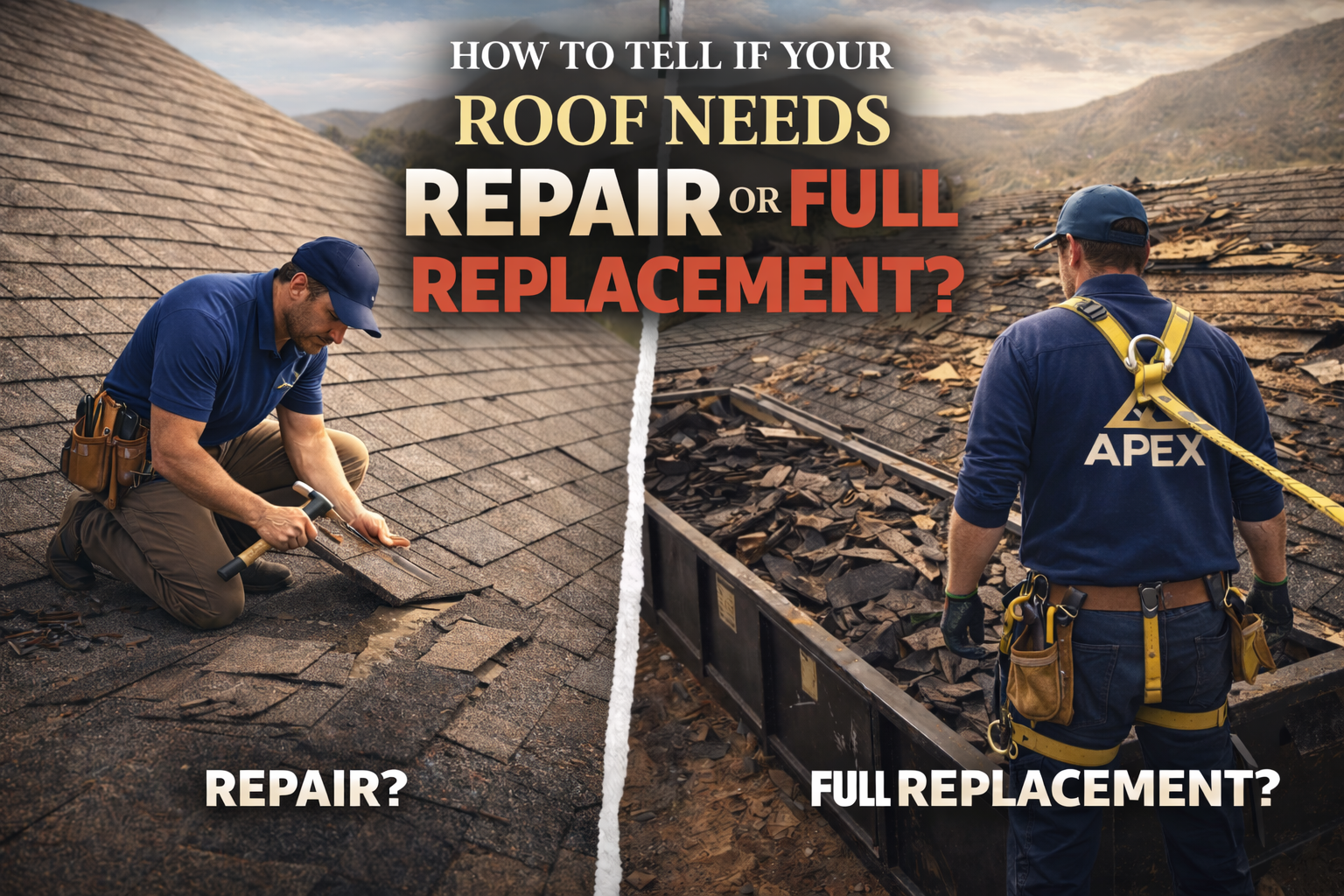
How to Tell If Your Roof Needs Repair or Full Replacement ?
It All Begins Here
One of the most common concerns homeowners have is knowing whether a roofing issue can be repaired—or if a full replacement is unavoidable. Understanding the difference helps you make confident decisions and avoid unnecessary expenses.
Signs your roof may only need a repair:
Isolated leaks in one specific area
Damage caused by a single storm or wind event
A small number of cracked or slipped tiles
Flashing or sealant failure around vents or walls
No widespread underlayment deterioration
Why repairs are often enough:
When the roofing system is still structurally sound, targeted repairs can restore protection without the cost of a full replacement. Addressing issues early is key.
Signs your roof may need full replacement:
Multiple leaks in different areas
Widespread underlayment failure
Consistent moisture issues inside the home
Extensive tile movement or breakage
A roof nearing or exceeding its expected lifespan
Why replacement may be the better option:
When problems are widespread, repairing one area at a time can become more expensive over the long run. Replacement ensures the entire system performs as intended.
Factors that influence repair vs replacement decisions:
Roof age and previous repair history
Type of roofing system installed
Quality of original installation
Local climate exposure and heat stress
Why age alone isn’t everything:
Two roofs of the same age can perform very differently. Condition matters more than the calendar.
How a professional inspection helps:
Identifies the true source of leaks
Evaluates underlayment condition
Determines cost-effective solutions
Prevents unnecessary work
The takeaway:
Not every roofing issue requires a new roof. A clear, honest assessment helps you choose the option that protects your home and your budget.